Kind training, step by step / Lesson
training-06 · 30 min study time
Introduce cooperative care with a real pause button
Practice a tiny familiar touch with the cat’s continued participation, and leave procedures and painful handling to the veterinary team.
Lesson duration includes reading, planning, worksheets and reflection. Optional cat practice is brief, voluntary and stops at the first sign of discomfort; the listed minutes are never a confinement or handling target.
Pause and recall
What will you do immediately when the cat turns away?
Choose a very small care goal
Cooperative care develops voluntary participation in everyday handling. It is useful preparation, not a promise that every necessary procedure can be optional. This beginner lesson uses only a brief touch in an area the cat already comfortably accepts, such as a familiar cheek stroke. It does not teach nail cutting, ear cleaning, tooth work, mouth opening, restraint or treatment. If any touch appears painful or the response changes unexpectedly, seek veterinary advice before practicing.
Agree on an observable start and stop
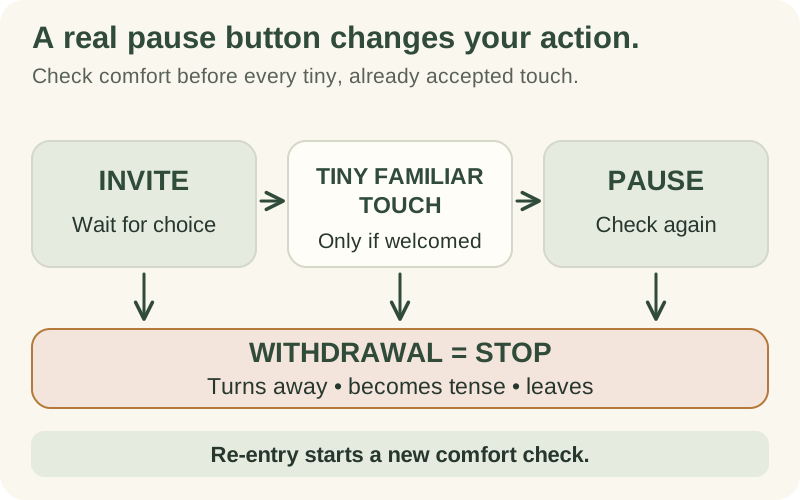
A familiar mat can be a place to invite participation, but being on it does not grant blanket permission. Wait for relaxed voluntary engagement, offer one tiny familiar touch, withdraw and reward. Pause after each attempt. Turning away, lifting away from contact or leaving ends that attempt; do not follow the cat with the brush or hand. Re-entry invites a fresh comfort check, not automatic resumption of a harder task. If unsure, stop.
Keep intensity, location and equipment separate
Changing touch duration, body area and introducing a new tool at once makes the experience difficult to interpret. First rehearse the sequence with a stuffed toy or your own sleeve. In the fictional example, Rhea plans one familiar cheek stroke, then a pause. Her cat turns away before contact; she stops, records the event and does not substitute shoulder or paw handling. A future grooming or examination goal should be broken down with the veterinarian or an appropriately qualified reward-based professional.
Measure the caregiver’s choices
A successful practice record can say ‘stopped immediately when the cat turned away.’ It need not say ‘completed the touch.’ Record the offered step, the signal you noticed and your response. Learning checks assess your understanding, not the cat’s obedience, health or suitability for a procedure. Necessary medical care should not be delayed while waiting for a training milestone. Tell the veterinary team what helps and what the cat finds difficult, and follow their individual care advice.
Try it gently
Rehearse start, touch, pause and stop
- Complete ws-training-06 with one familiar accepted touch, a participation signal and two specific stop signals.
- Rehearse on a stuffed toy or your sleeve: offer, pause, touch briefly, withdraw, reward, pause. This rehearsal alone completes the practical activity.
- Optional: if a healthy, comfortable cat voluntarily joins, check that familiar contact is welcome before one tiny attempt.
- Immediately stop if the cat turns away, tenses or leaves. Keep your hands still or withdraw calmly; do not follow.
- Record what you noticed and whether your response matched the stop rule.
- Write one question for the veterinary team before adding any tool, sensitive body area or care procedure.
Pause or stop when
- Withdrawal, tension, a head turn away, tail agitation or leaving: stop contact immediately.
- Pain, illness, a new handling reaction or persistent fear: pause training and contact the veterinarian.
- A needed medical procedure: follow professional guidance rather than delaying it to obtain a training score.
Knowledge check
Check your understanding
Try each question, then review the explanation. You can try again as often as you like.
Completion records this knowledge check. It is not an instructor-verified assessment or permission for practical work.
Reflect on your practice
Assess your observation, reasoning and planning, never a cat’s obedience. A fictional case or a decision to stop can demonstrate learning. Quiz results remain separate.
Choose your reflection descriptors
Help improve this lesson
Lesson sources
- Cat Training Techniques for CaregiversFelineVMA
- How to Pet & Handle CatsFelineVMA / Cat Friendly Homes
- How to pet a catCats Protection
- Signs of Pain in Cats: How to Tell If Your Cat Is HurtingAmerican Animal Hospital Association (AAHA)