Twelve guided worksheets and three complete facilitator sessions. All activities can be completed with fictional cases, props or observation; a live cat is never required.
Record observations while giving the cat space. Paper scenarios can replace live practice.Teaching illustration.
12 worksheets · 3 facilitator sessions
Learner worksheets
Fill in · Download · Print
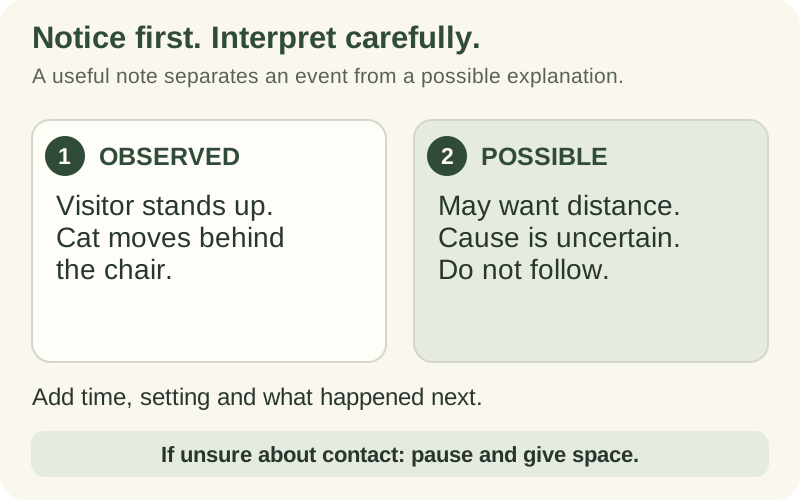
Describe the event before offering an explanation. A cat’s stillness alone does not establish comfort.ws-care-01
Observation before interpretation
Capture what happened without diagnosing an emotion or forcing an interaction.
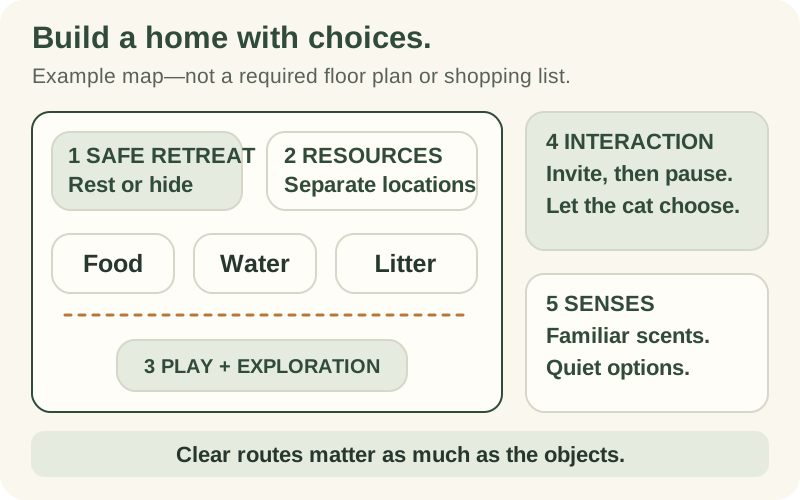
Open worksheetThe five needs guide the functions of a home. The map is illustrative; separate resources and provide routes the individual cat can use.ws-care-02
A home with choices
Turn a resource map into one affordable, reversible improvement.
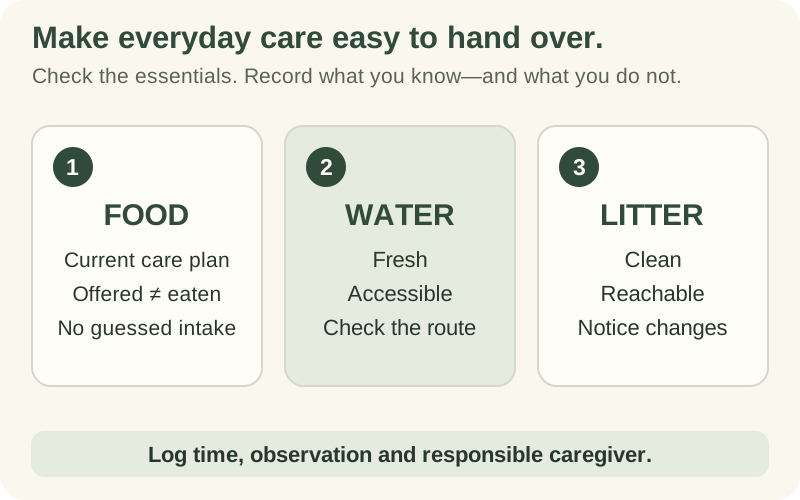
Open worksheetA handoff records actual care and uncertainty. New changes need veterinary advice; a log must not delay urgent care.ws-care-03
Daily care and caregiver handoff
Keep essential care responsibilities clear and notice meaningful changes.
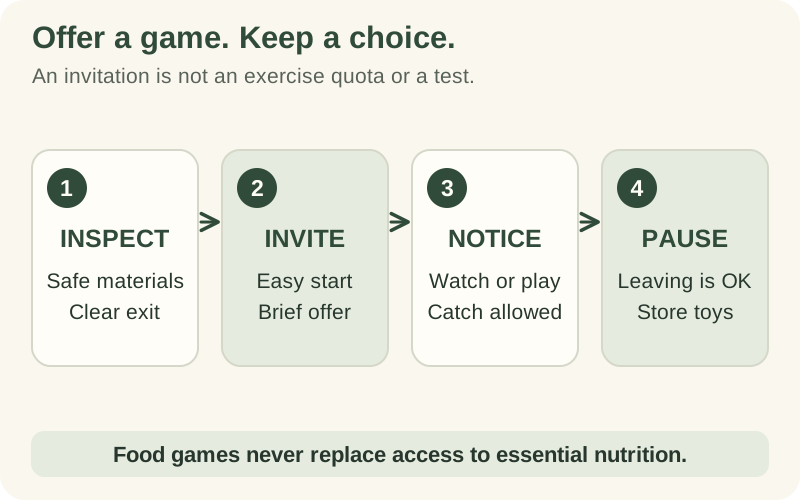
Open worksheetStart easy and observe the response. Supervise equipment that can tangle or be swallowed, and allow the cat to leave.ws-care-04
Play and foraging experiment
Offer one easy activity and adjust it based on voluntary engagement.
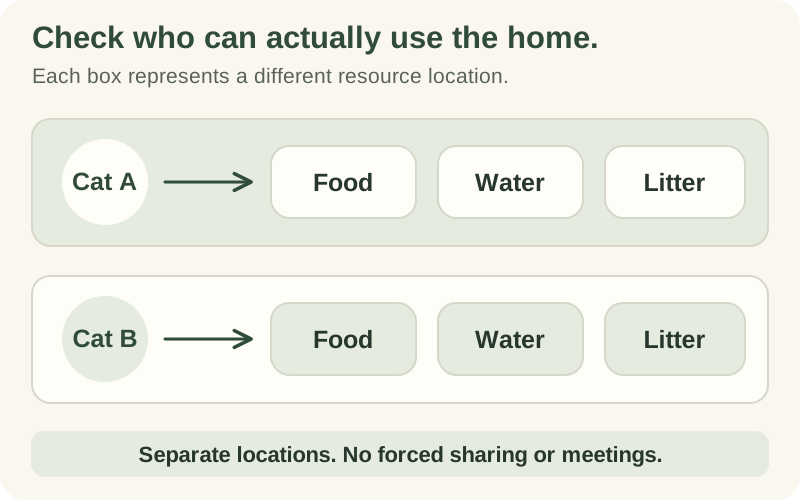
Open worksheetThe lanes represent separate usable locations, not bowls lined up together. Observe blocking, waiting and retreat without assigning blame.ws-care-05
Scratching and shared-resource access
Support normal behavior while noticing who can actually use the home.
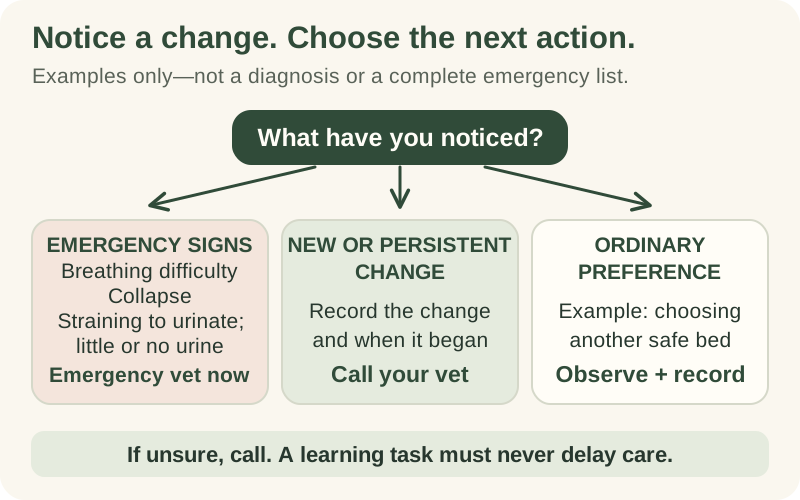
Open worksheetUrgent signs override the activity. Straining with little or no urine, breathing difficulty and collapse are emergency examples; this list is not exhaustive.ws-care-06
Changing needs and veterinary handoff
Separate safe home adaptation from diagnosis and medical triage.
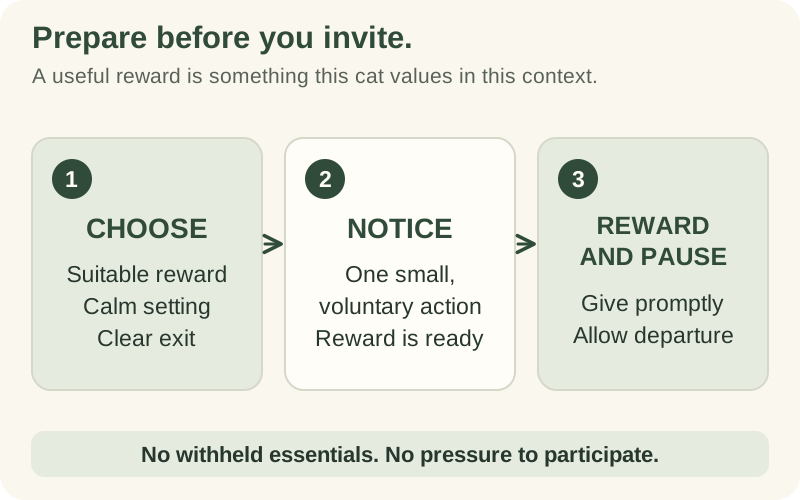
Open worksheetPrepare a suitable reward and a quiet setting before asking for a tiny action. Participation includes the freedom to stop.ws-training-01
Reward and readiness plan
Prepare the setting and reward before asking for a behavior.
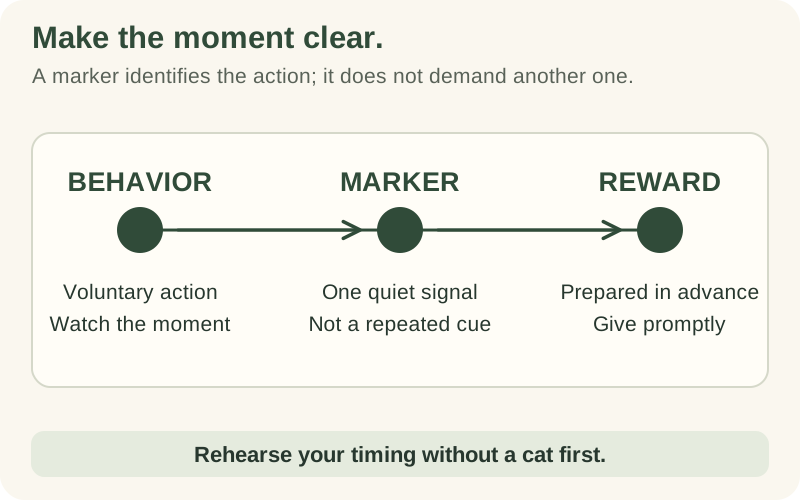
Open worksheetThe sequence is action, marker, prompt reward. Keep the signal quiet and consistent; practice your own timing before adding a cat.ws-training-02
Marker timing practice
Improve the caregiver’s timing before adding a training demand.
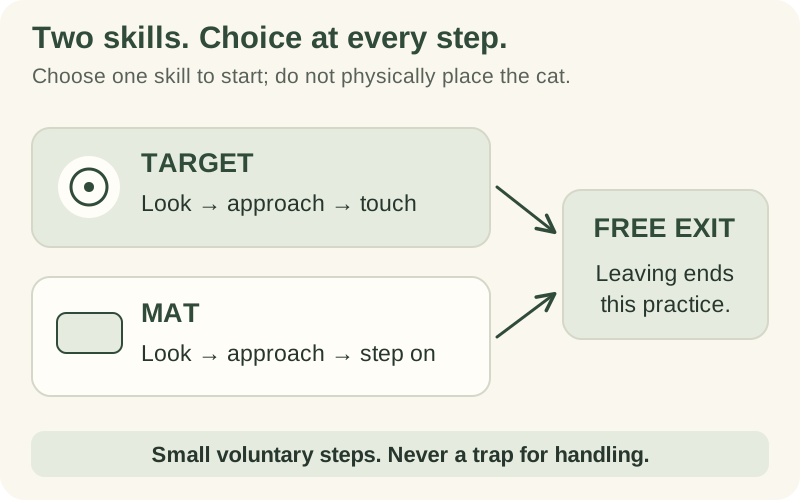
Open worksheetA target and a mat are different starting options. Build gradually, and let departure end the attempt.ws-training-03
Small-step target or mat ladder
Break a goal into choices that can be made easier.
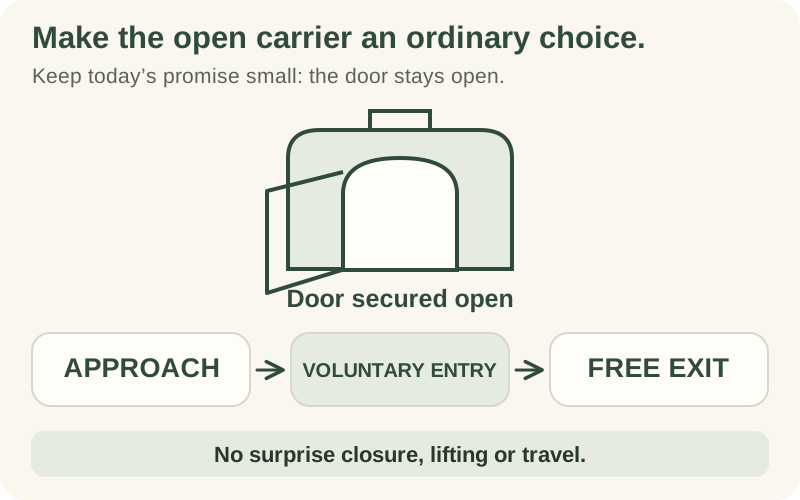
Open worksheetLooking or approaching can be a valid first step. Open-door practice must not turn into surprise confinement.ws-training-04
Open-carrier confidence plan
Make the carrier an available place without surprise closure.
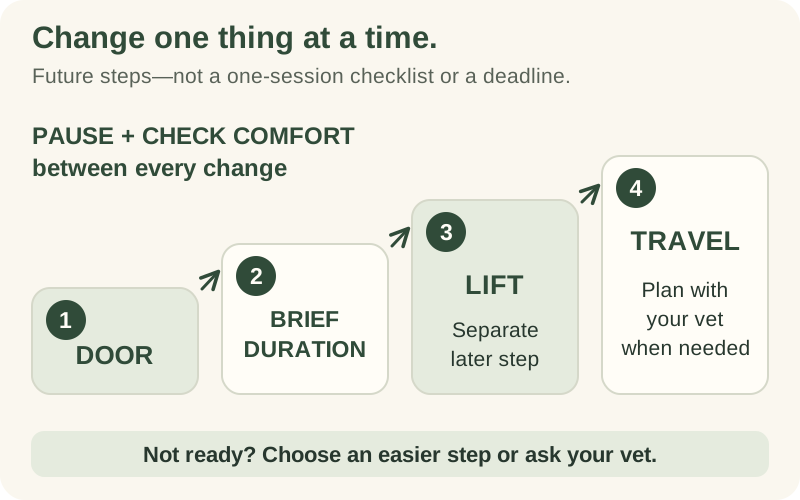
Open worksheetPractice one variable only after a comfortable prerequisite. Necessary veterinary care must not wait for a training milestone.ws-training-05
One carrier change and a journey plan
Avoid stacking door movement, closure, lifting and travel into one demand.
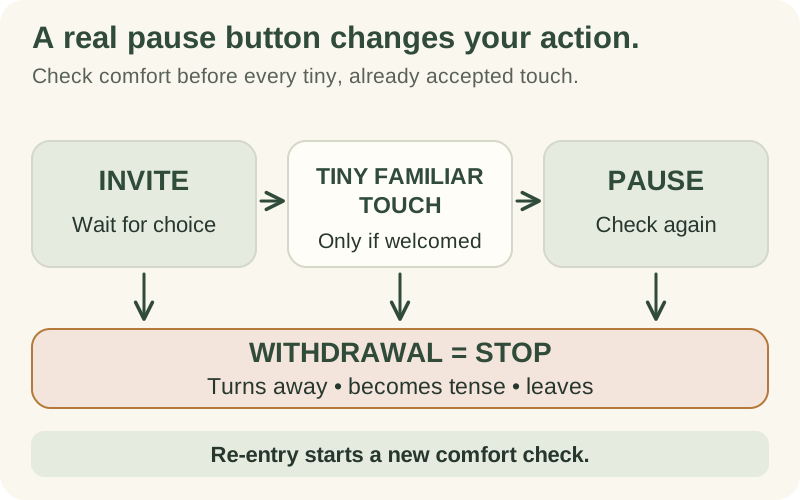
Open worksheetDeparture or withdrawal ends an optional touch attempt. Stopping before contact can be a successful caregiver decision.ws-training-06
Cooperative-care participation agreement
Make the caregiver’s pause and stop decisions explicit.
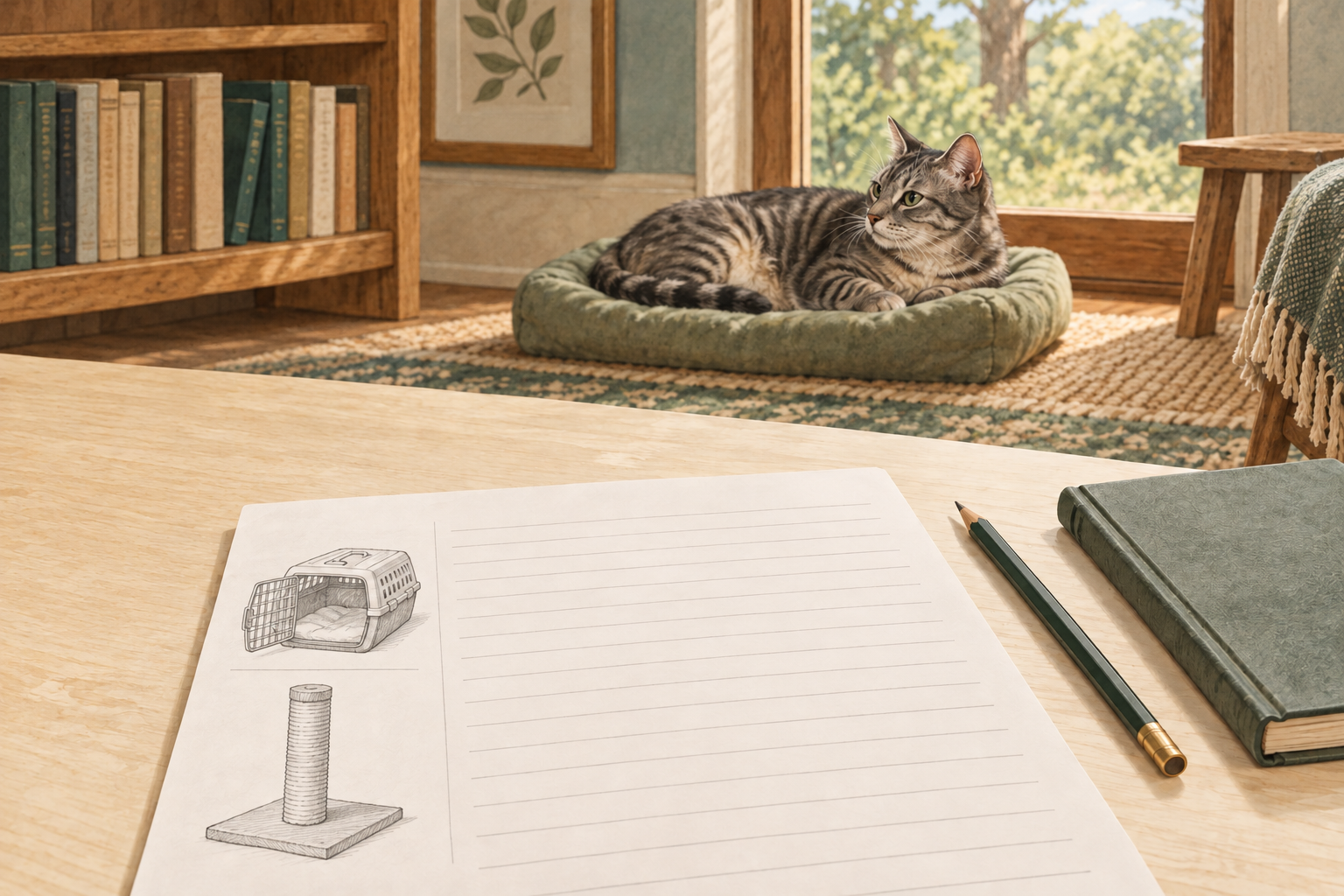
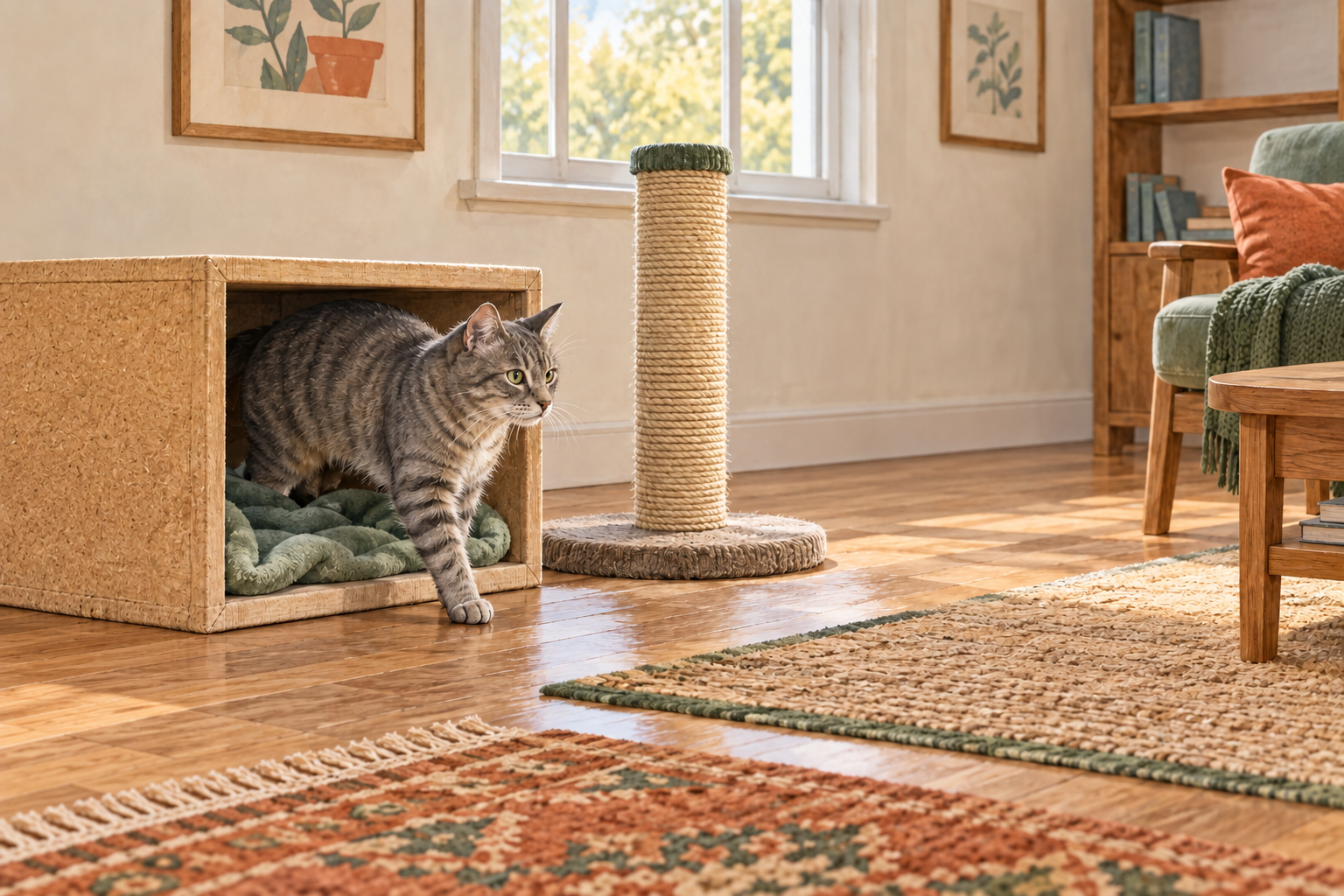
Notice the separate hide, scratching surface and open route. Offer choices your cat can reach.Teaching illustration.60-minute session
A home seen from a cat’s point of view
Adult caregivers, community educators and supervised teen learners; no live cat is needed.
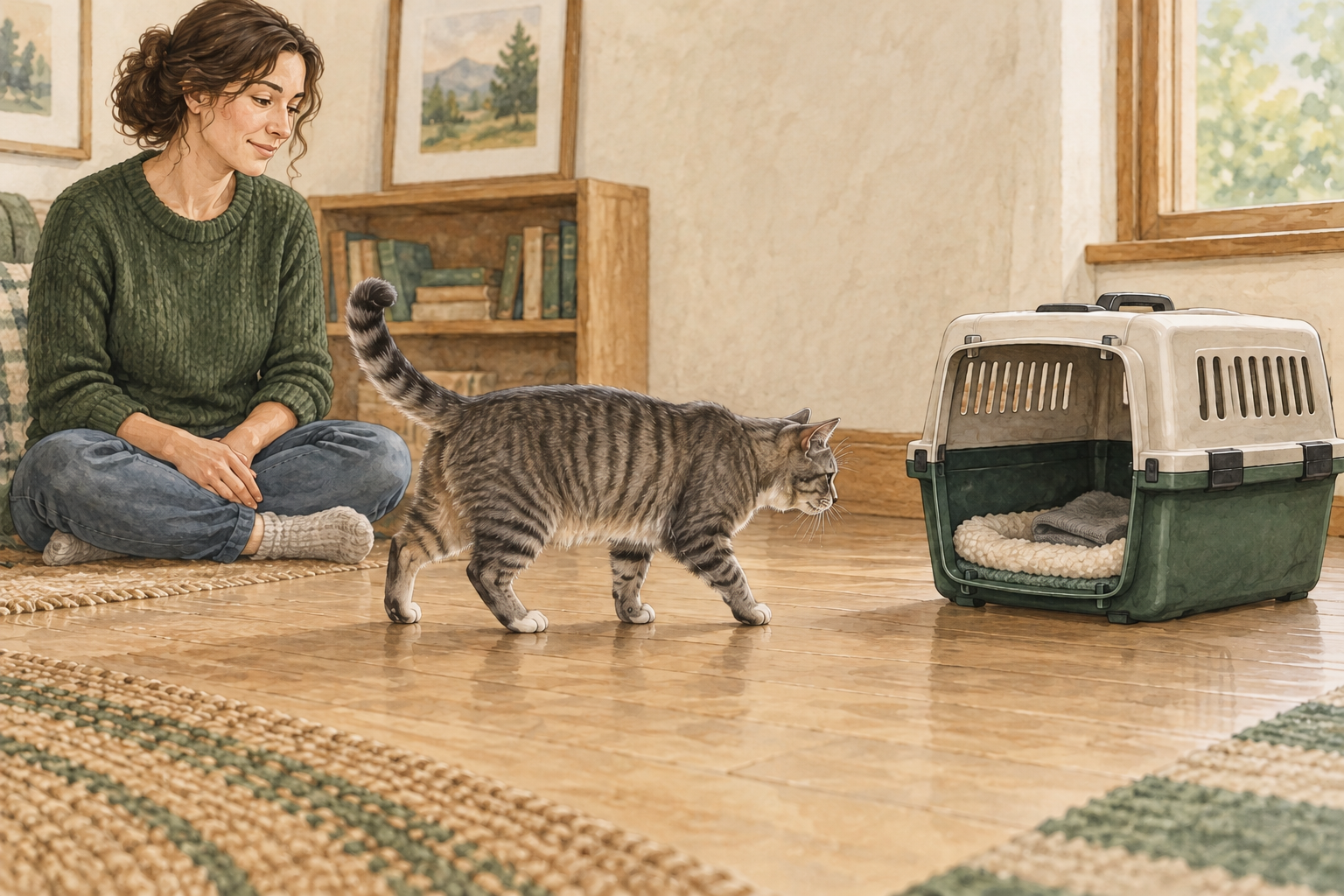
Open facilitator guideThe cat can approach or leave. Follow the carrier maker’s instructions before removing or securing a door for supervised practice.Teaching illustration.75-minute session
Kind training lab: small steps and reliable pauses
Adult caregivers or supervised older learners; all practical tasks use people, objects or stuffed toys.
Open facilitator guideRecord observations while giving the cat space. Paper scenarios can replace live practice.Teaching illustration.60-minute session
Evidence, reflection and improving the curriculum
Caregivers, educators and curriculum maintainers reviewing learning quality; no clinical assessment is performed.
Offer spoken answers, drawing, large-print copies or a partner scribe. Assess understanding, not writing speed. Use scenarios in place of handling demonstrations.