Skip to learning
THE CAT CODE™Cat Academy · A little knowledge. A better connection.

Learning materials / Worksheet

Cat Academy · ws-care-06

Changing needs and veterinary handoff

Separate safe home adaptation from diagnosis and medical triage.
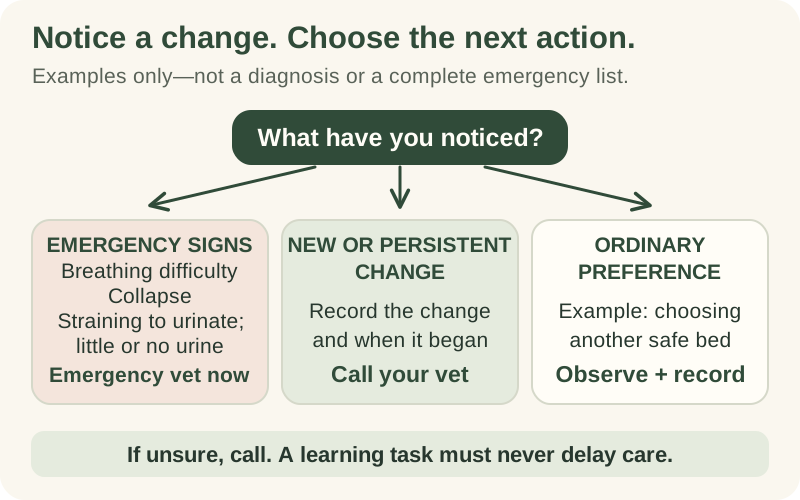
Emergency examples such as breathing difficulty, collapse or straining with little or no urine require emergency veterinary care. New or persistent changes need a veterinary call. An ordinary preference can be observed. If unsure, call.
Urgent signs override the activity. Straining with little or no urine, breathing difficulty and collapse are emergency examples; this list is not exhaustive.
Pause and recall

What would make you stop observing and contact a veterinarian now?

  1. Use a fictional or resolved example for practice; current urgent signs require action now.
  2. Write baseline and change separately.
  3. Do not share medical or personal details with a class unless you choose to.

Answers stay on this page only and are not saved automatically. Download before navigating away. Avoid personal contact or medical details.

What the cat normally does in this situation.

What you actually noticed and when.

Emergency care, prompt call, or ordinary preference observation; explain why.

No painful tests, forced movement or treatment changes.

Concern, timing and useful context; no guessed diagnosis.

Private clinic details, backup transport, professional instructions and review date.

Return to companion lesson

Loading browser progress…