Everyday care & enrichment / Lesson
care-06 · 30 min study time
Adjust care when needs change and know when to call
Make a practical observation and referral plan for changing mobility, routines and health without diagnosing at home.
Lesson duration includes reading, planning, worksheets and reflection. Optional cat practice is brief, voluntary and stops at the first sign of discomfort; the listed minutes are never a confinement or handling target.
Pause and recall
What would make you stop observing and contact a veterinarian now?
Do not explain away a change
An older cat who stops jumping is not automatically ‘just slowing down.’ Changes in movement, grooming, litter use, sleep or social contact can have medical causes. Record when the change began and contact your veterinarian. You can make access easier while seeking advice, but a ramp does not diagnose or treat pain. Never give human pain medicine or change a prescribed treatment because of a lesson.
Adapt the route, not the cat’s standards
Review where the cat eats, drinks, rests and toilets. Stable non-slip access, an easier-entry litter box and a comfortable resting place that requires no difficult jump may help meet changing needs. Retain familiar choices where safe. In a fictional example, Bea stops using a high windowsill but still enjoys looking outside. An accessible resting option can preserve that interest while the caregiver arranges veterinary assessment. Do not repeatedly ask Bea to jump to prove whether she can.
Separate emergency action from a routine review
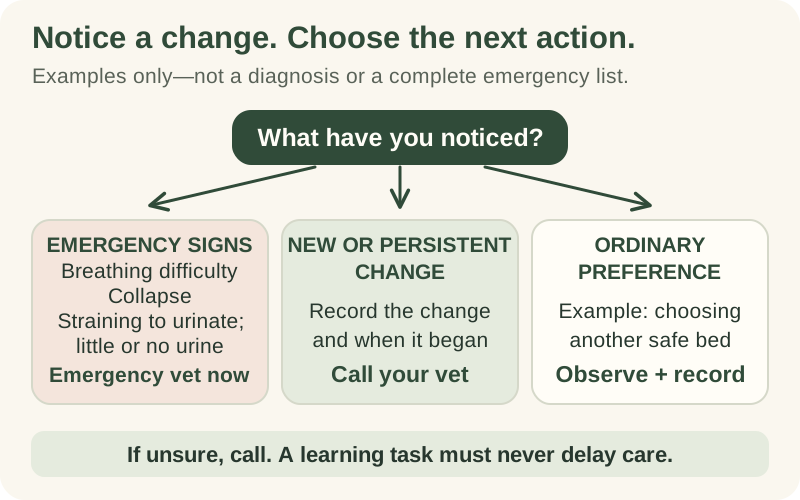
Seek immediate emergency veterinary care for breathing difficulty, collapse or unresponsiveness, serious trauma, or suspected inability to pass urine. Suspected poisoning also needs immediate professional advice; do not wait for symptoms or try an unapproved remedy. A cat who stops eating needs a prompt call to the veterinarian. Other new or persistent changes also warrant veterinary contact, with urgency based on the signs and the team’s advice. This list is not exhaustive: if unsure, call.
Prepare a concise handoff and a backup
A useful call starts with the concern and time course: ‘My cat normally jumps onto this chair; since yesterday she stops at the base and has eaten less.’ Add relevant recent changes and existing care instructions, without guessing a diagnosis. Ask what to do now, where to go and what information to bring. Keep carrier and transport plans available. Review your care plan after professional advice and share only the necessary instructions with a backup caregiver.
Try it gently
A changing-needs and contact plan
- Use ws-care-06 to choose a fictional scenario or a past resolved observation; do not delay care for a current concern.
- Write baseline, change and start time in separate fields.
- Choose one safe access adjustment that does not require handling or testing a painful body part.
- Classify the next action as emergency contact, prompt veterinary call, or planned observation of an ordinary preference. Explain the evidence.
- Draft a two-sentence handoff and list your regular and after-hours veterinary contacts privately.
- Set a review date for non-urgent home changes and record any professional instructions separately from your own interpretation.
Pause or stop when
- Breathing difficulty, collapse, serious injury, suspected poisoning, or straining with little/no urine: stop and seek urgent professional care.
- Not eating, changed mobility or an unusual reaction to touch: contact the veterinary team rather than testing or training through it.
- Never use a quiz score to decide whether a real cat needs medical attention.
Knowledge check
Check your understanding
Try each question, then review the explanation. You can try again as often as you like.
Completion records this knowledge check. It is not an instructor-verified assessment or permission for practical work.
Reflect on your practice
Assess your observation, reasoning and planning, never a cat’s obedience. A fictional case or a decision to stop can demonstrate learning. Quiz results remain separate.
Choose your reflection descriptors
Help improve this lesson
Lesson sources
- Behavior and Environmental Needs: Senior CatsAAHA / AAFP 2021 Feline Life Stage Guidelines
- Senior Care: caregiver brochureFelineVMA
- Help! Is This a Pet Emergency?AAHA
- Feline Lower Urinary Tract DiseaseCornell University College of Veterinary Medicine, Feline Health Center
- Cat Not Eating Normally Requires Medical CareFelineVMA / Cat Friendly Homes
- Common Feline Toxins and PoisonsFelineVMA / Cat Friendly Homes